Winter Diesel Fueling Checklist for Farms and Job Sites
Oct 15,2026 | Brearo
Cold mornings are hard enough without a fuel transfer pump that won't keep up.
When you're running tractors, skid steers, excavators, or other diesel-powered equipment, reliable fueling is part of keeping the job moving. But as temperatures drop, your fueling system faces a few challenges you might not notice during warmer months.
Cold diesel can become harder to move. Filters may become restricted. Worn hoses and weak electrical connections can also make an otherwise routine refueling job more frustrating.
The good news? A little preparation before winter can help you catch problems before they interrupt your work.
Whether you use a truck-mounted transfer tank, a portable diesel tank, or a stationary fueling setup, this winter diesel fueling checklist will help you inspect the components that matter most.
Quick Answer: What Should You Check Before Winter?
Before the first stretch of freezing weather, check these eight areas of your fueling system:
- Diesel fuel: Confirm your fuel is suitable for the temperatures expected in your area.
- Storage tank: Look for leaks, damaged fittings, and signs of water contamination.
- Fuel filters: Inspect filters and water separators for service needs.
- Hoses and nozzles: Check for cracks, kinks, leaks, and damaged connections.
- 12V power supply: Inspect battery connections, wiring, and electrical components.
- Tank venting and mounting: Confirm that the system is properly installed and secured.
- Pump operation: Check for unusual noise, inconsistent flow, or other changes under safe operating conditions.
- Maintenance supplies: Keep compatible replacement parts and appropriate spill-response materials available.
You don't have to rebuild your entire fueling system for winter. The goal is to identify potential problems early and make sure your equipment is ready for the conditions ahead.
Safety First: Fuel transfer equipment handles combustible or flammable liquids. Before inspecting or servicing the system, turn off the pump, isolate electrical power as required, and follow the manufacturer's procedures for relieving pressure. Keep ignition sources away, use suitable fuel-rated equipment, and follow applicable workplace safety requirements.
Why Cold Weather Matters for Diesel Fueling
A fuel transfer system that works well in September may behave differently on a freezing January morning.
One reason is that diesel fuel changes as temperatures decrease.
No. 2 diesel contains naturally occurring paraffin wax. In cold conditions, wax crystals can begin to form. The temperature at which these crystals first become visible is called the cloud point.
As temperatures fall further, wax crystals can accumulate in fuel filters and restrict flow. This is often described as diesel gelling or cold-weather filter plugging.
However, there isn't one temperature at which every diesel fuel suddenly gels. Cold-weather performance depends on the fuel's formulation, seasonal blending, additives, and operating conditions.
Cold weather can also expose problems in the fueling equipment itself.
For example:
- A partially restricted filter may become more noticeable as fuel gets colder.
- A loose electrical connection may limit the performance of a 12V transfer pump.
- A damaged hose or fitting may cause leakage or create flow restrictions.
- Water contamination can contribute to ice-related blockages in cold conditions.
That's why winter preparation should cover the complete fueling system—not just the pump.
1. Make Sure Your Diesel Fuel Is Ready for Winter
Start with the fuel itself.
If you're operating in an area with freezing temperatures, ask your diesel supplier whether the fuel you're buying is appropriate for the expected weather.
Depending on the region and season, suppliers may offer winterized diesel or blends designed for improved cold-weather operation.
What to check
- Is your stored diesel a summer-grade or winter-appropriate formulation?
- How cold is the weather expected to get?
- Has the fuel been stored through multiple seasons?
- Does your fuel supplier recommend a particular winter blend?
- Are any additives compatible with your equipment and fuel?
If you're considering an anti-gel additive, follow the fuel supplier's and equipment manufacturer's recommendations.
Cold-flow additives are generally intended as a preventive measure before fuel becomes too cold. They are not a substitute for correcting an existing blockage or contamination problem.
Practical tip: If you have diesel left in a storage tank from warmer months, don't assume it will perform the same way as freshly supplied winter-grade fuel.
Check with your fuel supplier before temperatures drop.
2. Inspect Your Diesel Transfer Tank
Your transfer tank is where the entire fueling process begins.
Whether it's mounted in a pickup truck bed or installed at a farm shop, its condition affects the reliability and safety of the rest of the system.
Before winter, take a few minutes to inspect the tank and its connections.
Look for visible damage
Check for:
- Cracks, dents, corrosion, or other damage.
- Fuel stains or evidence of leakage.
- Loose or damaged fittings.
- Damaged caps or seals.
- Problems with tank mounting and support.
Any tank with structural damage or leakage should be taken out of service until it has been properly evaluated.
Watch for water contamination
Water can enter diesel storage systems through several routes, including contaminated fuel deliveries, damaged seals, and moisture accumulation.
During freezing weather, water contamination becomes particularly concerning because ice can contribute to fuel-system restrictions.
If your tank has an approved inspection point, drain, or water-separation system, follow the manufacturer's instructions to check its condition.
Do not open unfamiliar fittings, remove pressurized components, or drain fuel onto the ground.
If you suspect significant contamination, have the fuel and system evaluated before using them.
Don't forget storage conditions
Keep fill caps properly closed, protect exposed components from physical damage, and follow the tank manufacturer's storage and ventilation requirements.
A clean, properly maintained tank is an important first step toward reliable winter fueling.
3. Check Your Fuel Filters and Strainers
If your diesel transfer pump begins losing flow in cold weather, the filter is one of the components worth checking.
A filter helps protect downstream equipment from dirt, rust, and other contamination.
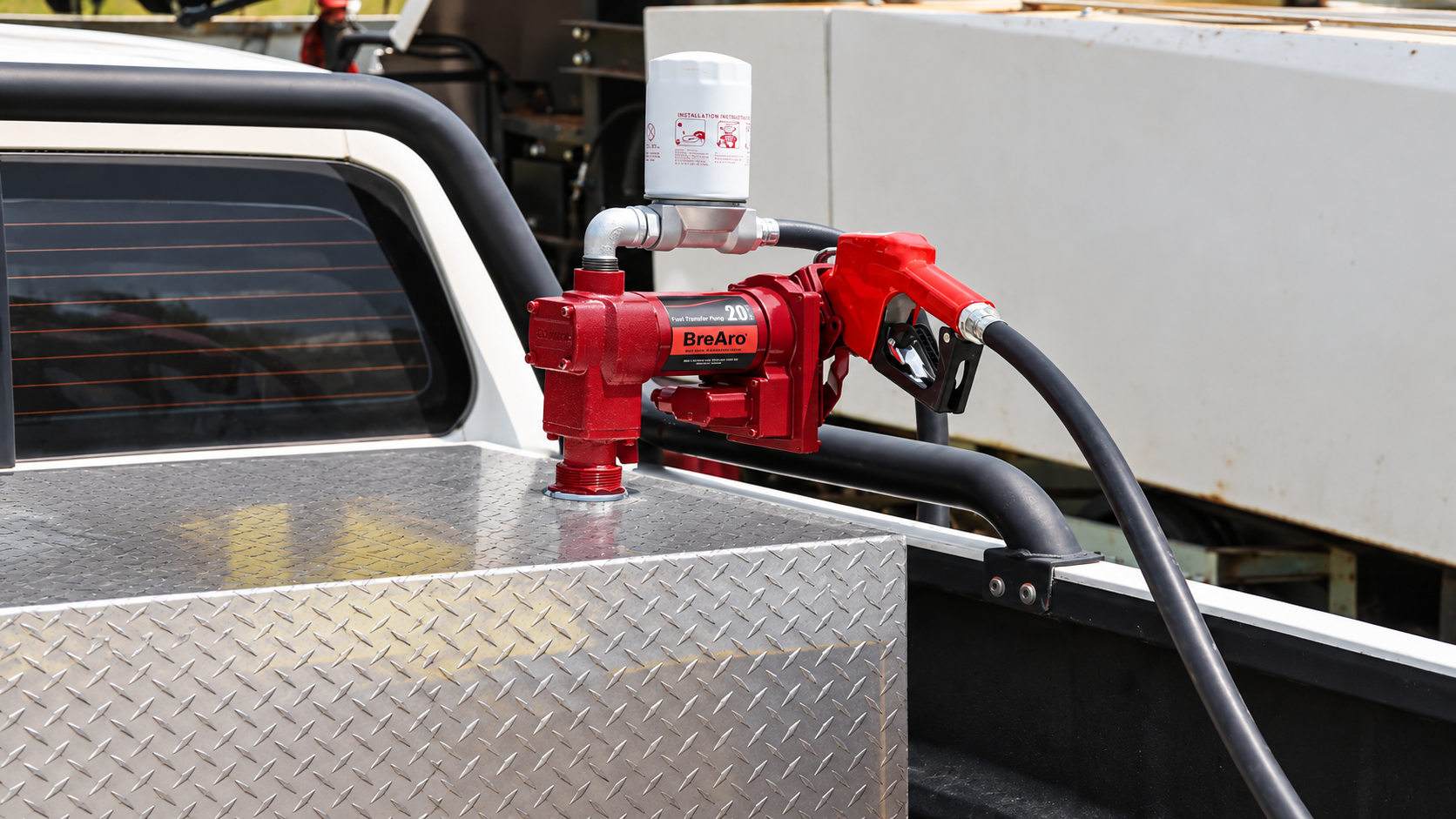
Over time, however, trapped material can increase resistance to fuel flow.
In cold weather, wax formation or ice contamination may create additional restrictions.
Before winter, inspect the following
Filter condition: Check whether the filter is due for replacement according to its service schedule.
Water separator: If your setup includes one, inspect and service it according to the manufacturer's instructions.
Filter housing: Look for leakage, damaged seals, or other visible problems.
Replacement parts: Make sure any spare filters are compatible with your specific system.
A filter that worked adequately during summer may already be near the end of its service life.
Replacing it at the recommended interval is usually a better approach than waiting for a noticeable drop in performance.
Important: Never permanently remove or bypass a required fuel filter to increase flow. If a filter repeatedly plugs, investigate the fuel condition and underlying cause.
4. Inspect Fuel Hoses, Fittings, and Nozzles
Your fuel hose has a tough job.
It may be dragged across a truck bed, used around heavy equipment, exposed to the weather, and handled repeatedly throughout the workday.
Before winter arrives, inspect the entire dispensing path.
Check the hose
Look for:
- Surface cracking or splits.
- Abrasion or exposed reinforcement.
- Kinks and crushed sections.
- Bulges or unusual deformation.
- Leaks around fittings and couplings.
Also confirm that the hose is rated for the fuel, pressure, and operating temperatures involved.
Not every fuel hose has the same temperature rating or intended application.
If the hose is damaged or no longer meets the requirements of the system, replace it with a suitable fuel-rated component.
Check the nozzle
Inspect the nozzle for visible damage and signs of leakage.
If you use an automatic shut-off nozzle, confirm that it operates according to the manufacturer's instructions.
A nozzle that leaks, sticks, or shuts off abnormally should be inspected rather than forced into service.
Think about hose routing
Make sure your hose isn't routinely being crushed by equipment, pinched by a tailgate, or pulled around sharp edges.
If you use a fuel hose reel, check that the hose feeds and retracts correctly and that the reel is securely mounted.
Good hose routing can make everyday fueling easier while reducing unnecessary wear.
5. Check the 12V Power Supply Before the Cold Sets In
For a 12V fuel transfer pump, electrical power is just as important as the fuel supply.
The pump motor needs adequate voltage and properly sized wiring to operate as intended.
A weak battery or poor electrical connection can affect performance even when the motor still turns.
Inspect your electrical setup
Before winter, check:
Battery condition: Is the power source adequately maintained and suitable for the pump?
Battery connections: Are the terminals and connections secure and free from excessive corrosion?
Power cables: Are the wires undamaged and correctly sized according to the pump manufacturer's requirements?
Fuse protection: Is the specified fuse installed and in good condition?
Cable routing: Are the cables protected from abrasion, pinching, and other physical damage?
Grounding: Is the electrical installation consistent with the manufacturer's instructions?
Cold temperatures can also reduce available battery performance, making existing electrical problems more noticeable.
A pump may still run even when voltage drop is affecting its output.
When electrical testing is necessary, have it performed using the procedure specified for the equipment and appropriate precautions for the fueling environment.
Never increase the fuse rating simply to prevent it from blowing.
If a fuse repeatedly fails, stop using the equipment until the cause has been identified.
6. Check Tank Venting and System Mounting
It's easy to focus on the pump and forget the other parts of the installation.
But a fuel transfer system depends on several components working together.
Check the tank vent
As fuel leaves a storage tank, air generally needs to replace it.
If the venting system becomes obstructed or fails to operate as designed, a vacuum can develop and affect fuel delivery.
Inspect accessible vent components according to the tank manufacturer's recommendations.
Do not modify or bypass required venting devices.
Inspect the mounting hardware
For truck-mounted systems, confirm that the tank, pump, hose reel, and related components are properly secured.
Look for:
- Loose mounting bolts.
- Damaged brackets.
- Evidence of movement.
- Components interfering with vehicle operation.
- Hoses or cables exposed to avoidable damage.
A properly secured installation matters year-round, but it's especially helpful before winter conditions make routine maintenance more difficult.
Also confirm that the tank and installation meet the requirements applicable to your vehicle, location, and intended use.
7. Make a Safe Test Run Before You Need the System
Don't wait until you're trying to refuel equipment on a freezing morning to find out that your system has a problem.
After completing the appropriate inspections, perform an operational check under safe, controlled conditions.
Only operate equipment that has passed its safety inspection.
During normal fueling, pay attention to:
Pump sound: Does the motor sound different from normal?
Fuel flow: Is delivery noticeably slower or inconsistent?
Connections: Are there signs of leakage?
Nozzle performance: Does the nozzle operate correctly?
Pump operation: Is the equipment operating within its specified limits?
If anything seems unusual, stop the operation and investigate the cause using the manufacturer's troubleshooting instructions.
What if the pump runs but fuel barely moves?
Low fuel flow doesn't automatically mean the pump has failed.
It may be related to:
- Fuel condition.
- Filter restrictions.
- Suction-side problems.
- Hose or nozzle restrictions.
- Battery voltage.
- Tank venting.
Rather than replacing the pump immediately, check the complete system.
For a detailed explanation, read our guide:
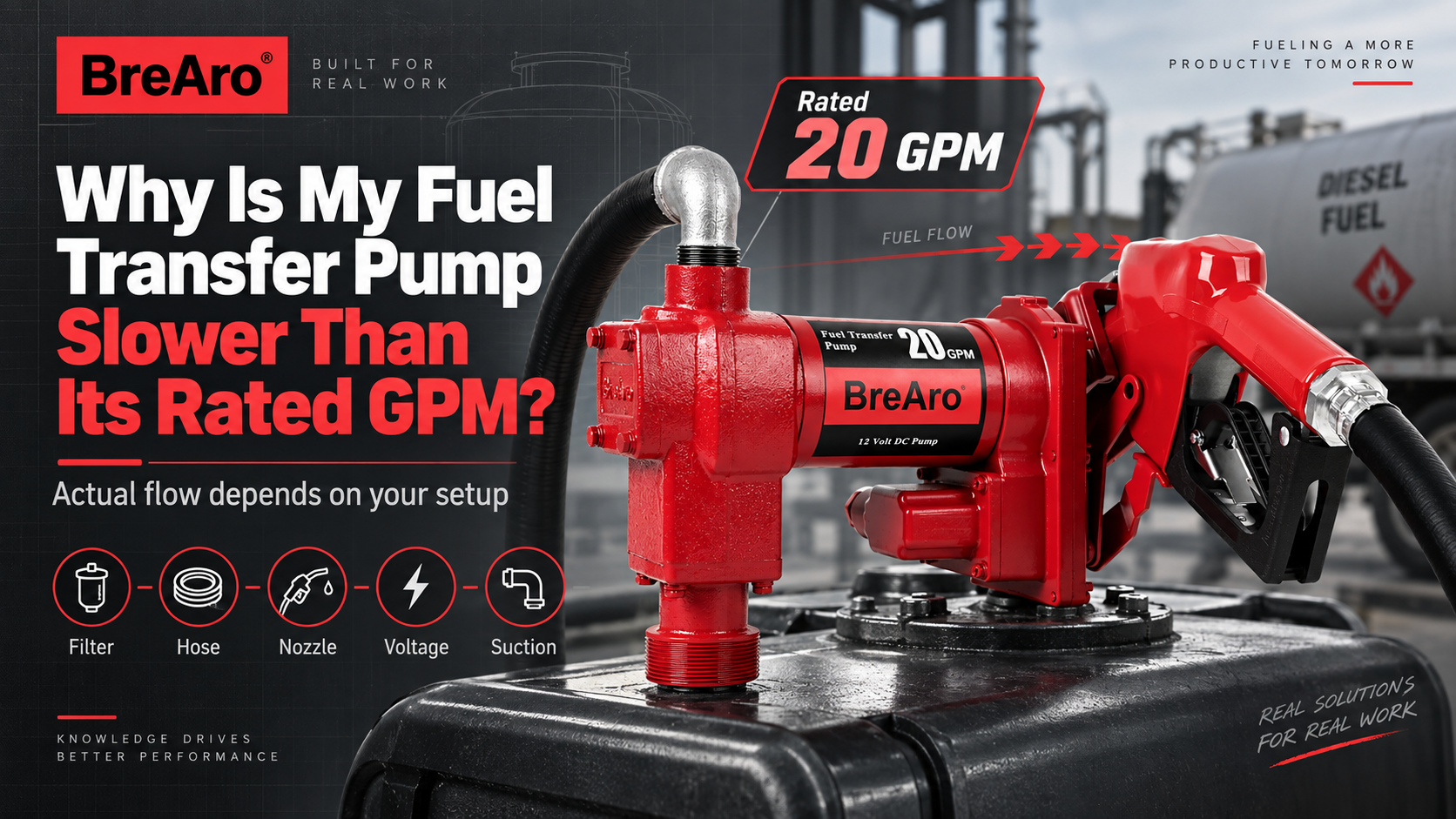
Why Is My Fuel Transfer Pump Slower Than Its Rated GPM?
It explains how pump ratings differ from actual nozzle flow and which components can affect performance.
8. Prepare a Simple Winter Fueling Maintenance Kit
A little preparation can make routine maintenance easier, especially when your equipment is located away from the shop.
Consider keeping a small set of supplies suited to your particular fueling system.
Useful items may include:
- Compatible replacement fuel filters.
- Approved replacement seals or fittings.
- The pump and tank manuals.
- Appropriate hand tools.
- Approved cleaning and spill-response materials.
- A flashlight suitable for the working environment.
- Contact information for maintenance support.
Keep supplies protected from moisture and stored according to the relevant safety requirements.
You don't need to carry every possible replacement part. Focus on the components your equipment actually uses and the maintenance activities you're qualified to perform.
Winter Fueling Troubleshooting: What Are the Warning Signs?
Even with good preparation, equipment problems can still occur.
Here's a quick reference for identifying potential issues.
| What You Notice | Possible Cause | What to Check |
|---|---|---|
| Pump runs, but fuel flows slowly | Restricted filter, cold fuel, or low voltage | Fuel condition, filters, and electrical supply |
| Pump runs but won't deliver fuel | Loss of prime, suction restriction, or another system issue | Manufacturer's troubleshooting procedure |
| Flow starts normally, then slows | Filter restriction or tank venting problem | Filter condition and approved vent components |
| Fuel leaks near the hose or nozzle | Damaged hose, seal, fitting, or nozzle | Inspect and replace damaged components |
| Pump stops unexpectedly | Electrical fault, protection system, or duty-cycle limit | Power source and pump manual |
Remember: These are possible causes, not confirmed diagnoses.
Always stop using a system that shows leakage, unsafe electrical conditions, or other signs of hazardous operation.
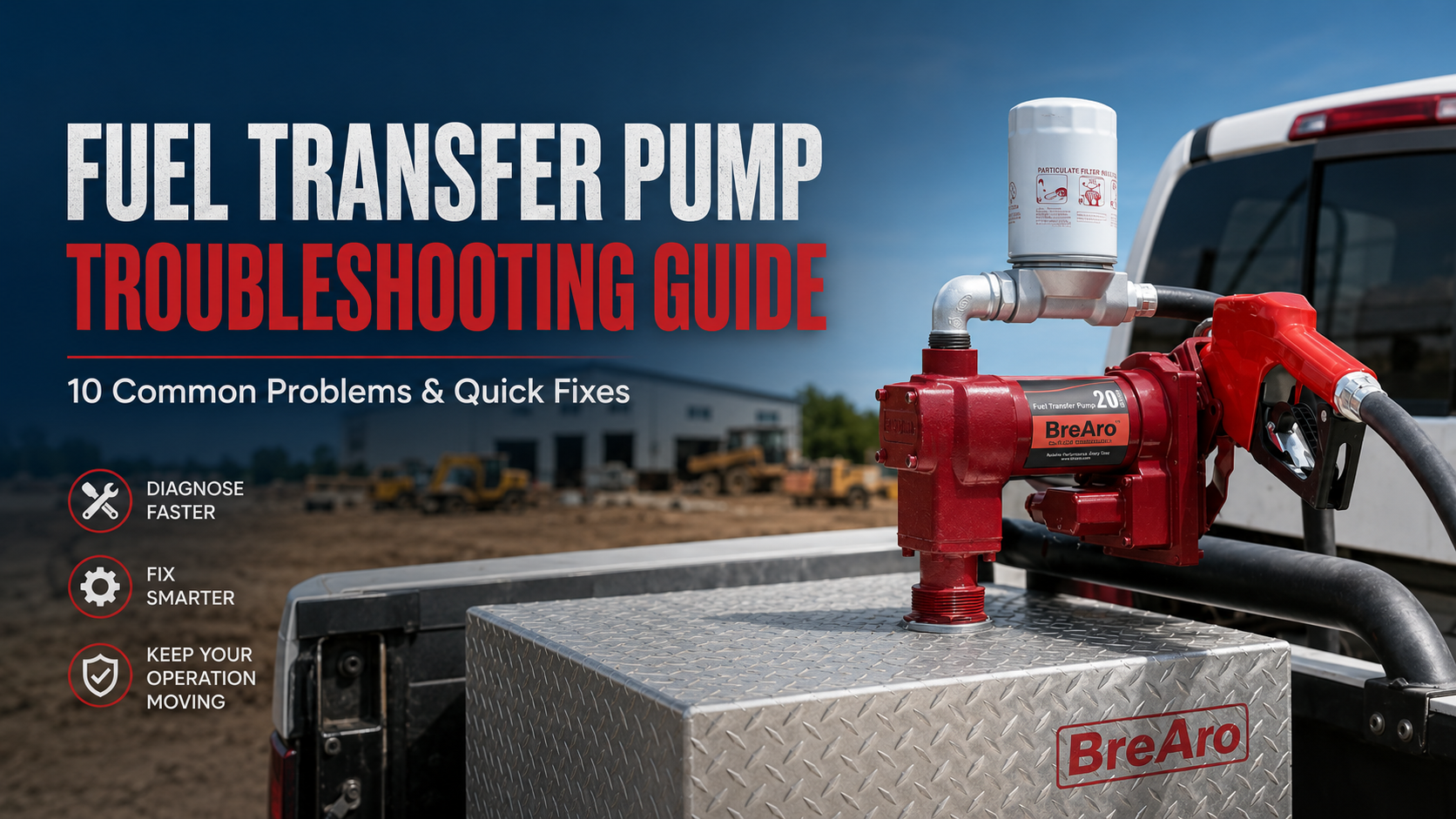
For a more detailed troubleshooting process, see:
Fuel Transfer Pump Runs but Won't Pump?
Common Winter Fueling Mistakes to Avoid
Some winter problems start with small decisions that seem harmless at the time.
Waiting until the fuel stops flowing
If you know cold weather is approaching, check your fuel grade and equipment before the temperature drops.
Preventive inspection is easier than diagnosing a failed fueling setup in the field.
Assuming a running pump is a healthy pump
A pump motor can run even when a filter restriction, suction problem, or weak power supply is affecting actual fuel delivery.
Judge the entire system, not just the sound of the motor.
Using the wrong fuel or additives
Never add gasoline, solvents, or other unapproved substances to diesel fuel in an attempt to solve cold-weather problems.
Follow fuel supplier and equipment manufacturer recommendations.
Trying to thaw fuel equipment with an open flame
Never use a torch, open flame, or improvised heater on a fuel tank, hose, filter, or pump.
If fuel has waxed or frozen contamination is suspected, follow the equipment manufacturer's approved recovery procedure or seek qualified assistance.
Ignoring a small leak
A small fuel leak is not something to put off until spring.
Stop using leaking equipment and repair or replace damaged components before returning the system to service.
Frequently Asked Questions
Can I use a diesel fuel transfer pump in freezing temperatures?
Possibly, but it depends on the pump's specified operating temperature range, fuel compatibility, and complete installation.
Check the manufacturer's documentation for your specific model.
Even if the pump itself is suitable for cold conditions, the diesel fuel and other system components must also be appropriate for the temperature.
At what temperature does diesel fuel start to gel?
There isn't one universal temperature.
The cloud point and cold-weather flow performance depend on the diesel formulation, seasonal blend, and additives.
Ask your fuel supplier about the cold-weather performance of the fuel you are using, particularly if you expect unusually low temperatures.
Why is my diesel transfer pump slower in winter?
Cold fuel can be more resistant to flow, and wax or ice contamination can restrict filters.
Low voltage, worn hoses, suction restrictions, and other installation issues can also affect actual flow.
Start by checking fuel condition and the complete system rather than assuming the pump itself is defective.
Should I change my diesel fuel filter before winter?
Follow the filter manufacturer's recommended maintenance interval.
If the filter is due for service, shows signs of restriction, or has been exposed to contaminated fuel, address the issue before winter operation.
A filter should not be replaced blindly if repeated plugging indicates a larger fuel-quality problem.
Do I need a special winter fuel transfer pump?
Not necessarily.
A properly selected pump may be suitable for year-round use when operated within its specified limits.
Check fuel compatibility, operating temperature, electrical requirements, duty cycle, and the conditions of your installation.
Also make sure the tank, hose, filters, and nozzle are suitable for the application.
Build a Fueling Setup That's Ready for Real Work
Winter preparation isn't about buying a completely new fueling system every year.
It's about making sure your current equipment is properly maintained, correctly installed, and suitable for the job.
For farms, construction crews, maintenance trucks, and other mobile fueling applications, the right combination of tank, pump, hose, filter, and nozzle can make everyday refueling more convenient.
If you're planning to replace an aging pump or put together a new mobile fueling setup, start by considering:
- The types of equipment you refuel.
- How many gallons you typically transfer.
- Your required hose length and routing.
- Available electrical power.
- Fuel compatibility and operating conditions.
- Maintenance and installation requirements.
BreAro offers a range of fuel transfer pump configurations for different mobile and stationary fueling needs.
Explore BreAro Fuel Transfer Pumps →
Compare the specifications of each model and choose a setup that matches your actual application.

Final Thoughts: Get Ahead of the Cold
Nobody wants to troubleshoot a fuel transfer system when there's work to finish and the temperature keeps dropping.
A reliable winter fueling routine starts with a few practical habits:
Check your fuel. Inspect your tank and filters. Look over your hoses and electrical connections. And make sure your equipment is operating properly before you depend on it in colder weather.
A little preparation now can help you avoid unnecessary interruptions later.
Because when winter shows up, your fueling equipment should be ready for the work ahead.
Comment